
Sexual Harassment in the Workplace
Developed for professionals across all industries, this course promotes respect, inclusion, and accountability. Learners will know how to prevent, report, and respond to harassment, helping to build a workplace culture where it is never tolerated.
At a glance
- 15 minutes
- 5 assessment questions
- No pre-requisites
- 80% pass mark
Accreditation
Chorus training certificate
£40.00
Per unit - exc. VAT
Why this course matters
- Everyone has the right to work in an environment free from harassment and discrimination
- Clear policies, training, and safe reporting routes help prevent harm and ensure concerns are addressed promptly and fairly
- Respectful, inclusive cultures improve wellbeing, retention, productivity, and organisational reputation

-
Overview
Sexual harassment harms individuals, damages team culture, and exposes organisations to legal and reputational risks. This course helps learners understand what sexual harassment is, how it impacts people and workplaces, and how to respond effectively. It explains the different forms harassment can take — verbal, non-verbal, physical, digital, and indirect — and why intent is not required if behaviour violates someone’s dignity or creates a hostile or offensive environment.
Learners will explore rights and responsibilities under the law, how employers can create safe reporting routes and investigate concerns, and the steps employees should take if they experience or witness harassment.
Respectful conduct isn’t just a compliance requirement; it’s a cornerstone of a safe, inclusive, and high-performing workplace. This course helps learners recognise risks, act responsibly, and protect their colleagues and organisation from harm. -
Who should take this course?
This training is suitable for:
- Employees at all levels in any organisation or sector
- Managers, supervisors, and team leaders responsible for people management and culture
- HR, People, and DEI practitioners involved in policy, training, or case handling
- Contractors, suppliers, and partners working on or with organisation sites or teams
- Anyone seeking clear guidance on preventing, identifying, and responding to sexual harassment at work
-
Learning outcomes
By the end of this course, learners will be able to:
LO1: Define what sexual harassment is and describe the different forms it can take
LO2: Explain how sexual harassment affects people and the workplace
LO3: Explain everyone’s rights and responsibilities in preventing and addressing harassment
LO4: Identify the appropriate steps to take if you experience, witness, or receive a report of sexual harassment
LO5: Recognise how to contribute to a respectful, inclusive workplace culture where harassment is not tolerated
-
Course content
This course combines high-impact visuals, clear narration, and
interactive activities to guide learners through:- What sexual harassment is and the different ways it can occur (verbal, non-verbal, physical, digital/online, indirect)
- The effects of sexual harassment on individuals and workplaces, including wellbeing, performance, and culture
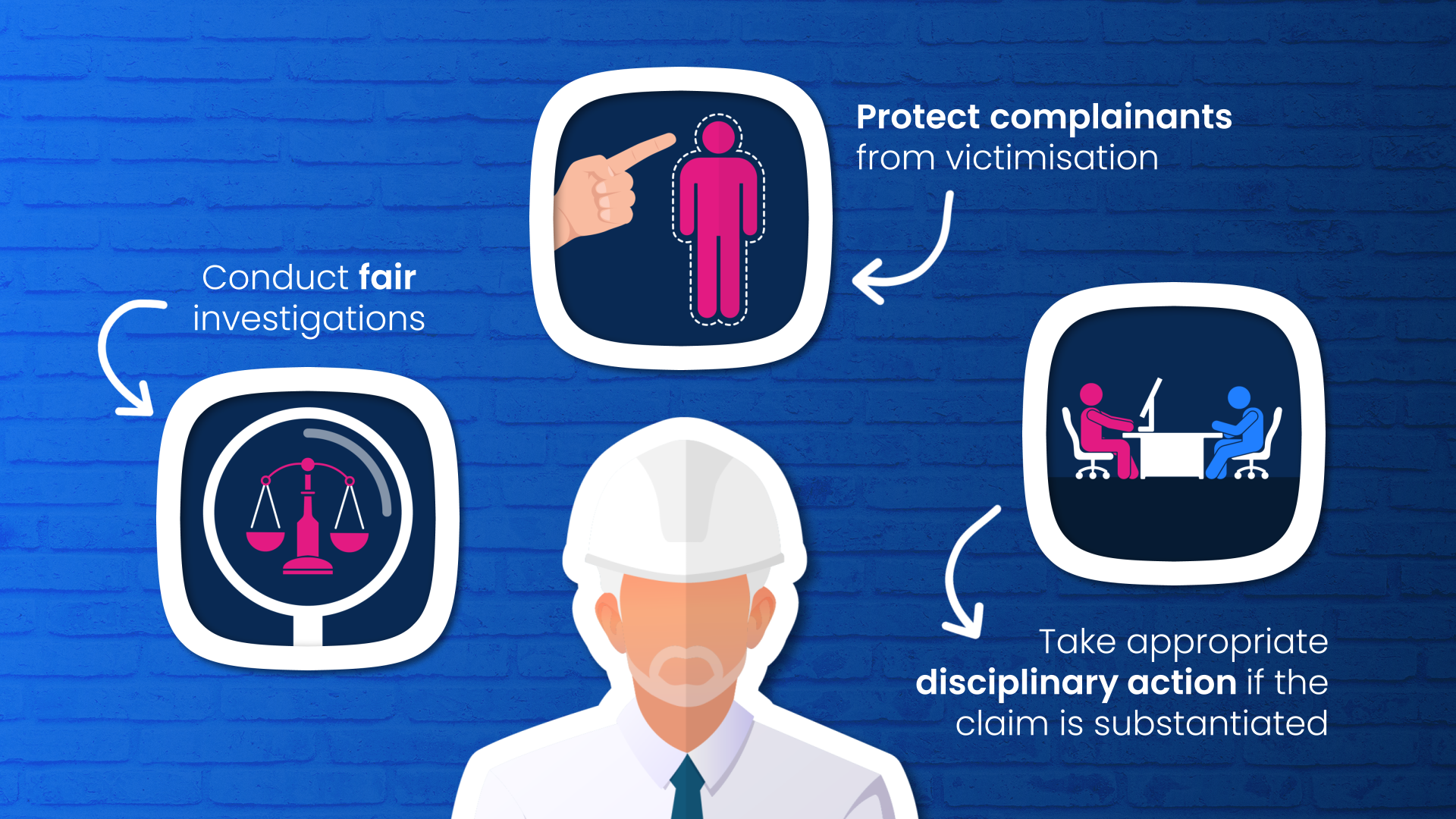
- Rights and responsibilities for employers and employees, including policies, reporting routes, and investigations
- Practical response steps if you experience, witness, or receive a report of sexual harassment, including documentation and escalation
- Everyday behaviours that build a respectful, inclusive workplace and challenge inappropriate conduct
- Scenario-based activities and formative checks to reinforce understanding
-
Assessment & certification
This Sexual Harassment in the Workplace training course ends with a 5-question multiple choice assessment with a downloadable certificate.
User certificates, training programmes and results are all stored centrally in your LMS and can be accessed at any time to reprint certificates, check pass marks and act as proof of a commitment to ongoing legal compliance.
-
What does my certificate include?
Your Sexual Harassment in the Workplace training certificate includes your name, company name (if applicable), name of course taken, date of completion, expiry date, and stamps of approval or accreditations by recognised authorities.
Note: If using SCORM delivery via a third-party LMS, certification will need to be generated within your host LMS.
Play video